The Evolution of AI in Software Development and Why It Matters Now
Repetition used to be the characteristic of software development. Developers wrote boilerplate code manually, implemented authentication systems by hand, spent hours searching documentation forums for answers, and wasted hours debugging small syntax errors that slowed down entire installations. One misplaced bracket may take all afternoon. Scalable systems require a lot of patience, thorough documentation, and trial-and-error debugging.
That period has not completely passed, but has been restructured as a whole.
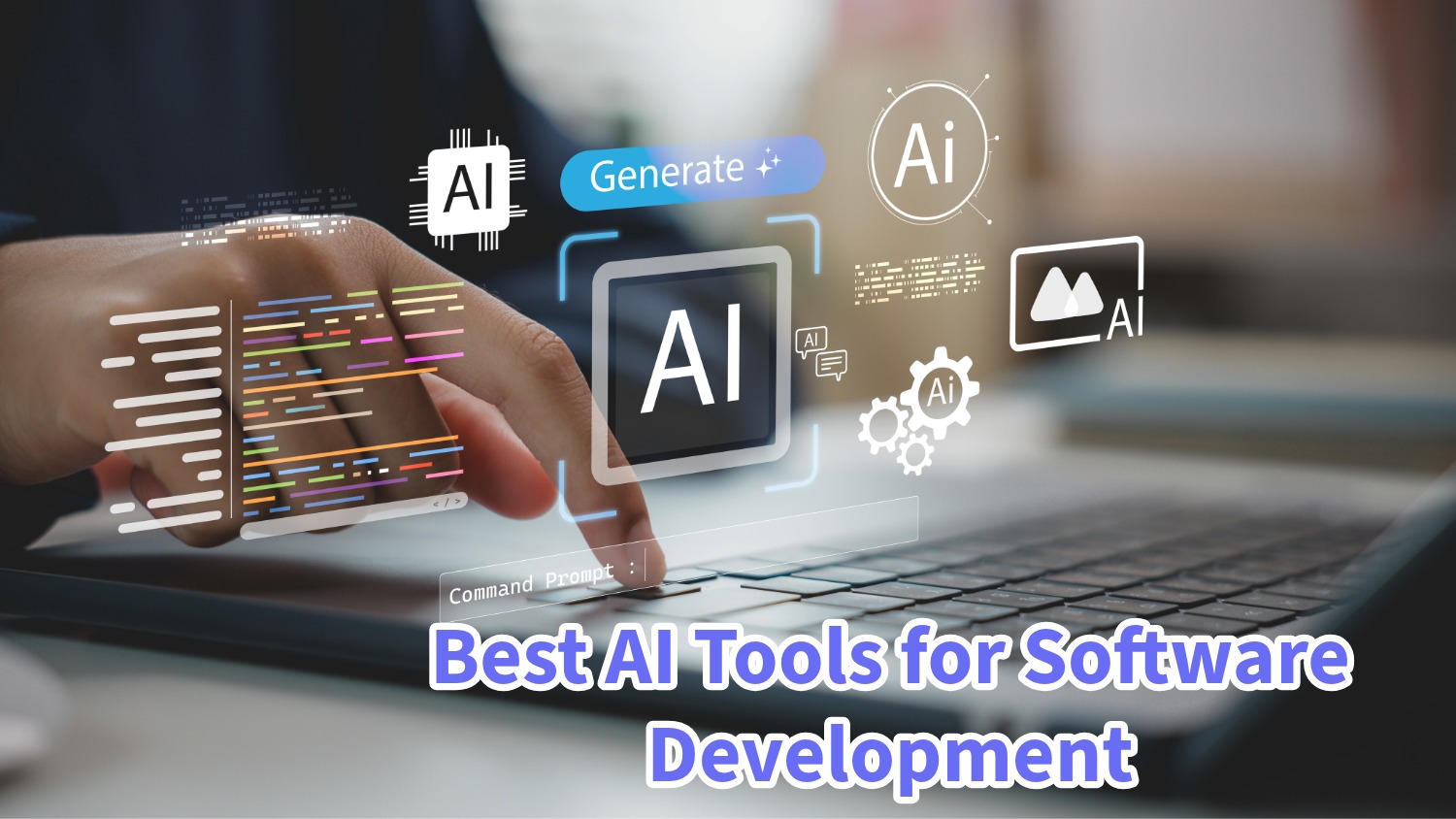
AI has transformed programming into more of an art than a collaboration between human engineers and intelligent systems. Machine learning research is now incorporated into everyday coding workflows. AI coding tools can generate entire functions, suggest optimized architecture patterns, detect vulnerabilities, and automate testing environments before a product ever reaches production.
This is not a progressive change. It is structural
Companies that embrace AI-driven software development processes speed up time-to-release, mitigate technical debt, enhance software quality, and improve engineering productivity without drastically scaling the engineering staff. In competitive digital markets where speed determines survival, AI for developers has become a strategic advantage rather than a novelty.
Software engineering with AI is not on the verge of the future. It is already incorporated into the construction of modern applications.
What Is AI in Software Development?
AI in software development involves using machine learning models, large language models, natural language processing systems, predictive analytics engines, and intelligent automation at every stage of the software development lifecycle.
Rather than developers resolving issues one line at a time, AI systems analyze patterns in large codebases and provide suggestions in context. They are aware of syntax patterns, programming designs, error designs, and architectural guidelines.
AI-assisted software development involves the following features:
Natural language to code translation, where developers write a purpose and get a result in the form of code.
- Static code analysis and real-time bug detection.
- Automatic creation of documentation.
- Improvement ideas for the performance.
- Automated predictive DevOps.
- Pattern recognition-based security scanning.
AI tools do not replace software engineers, but help reduce cognitive effort on repetitive tasks. Routine tasks are automated, allowing developers to concentrate on system design, product strategy, scalability, and innovation.
The Software Development Lifecycle Before and After AI
To grasp the impact of AI automation in programming, compare traditional workflows with modern AI‑enhanced workflows.
In the past, the requirements-gathering process relied solely on manual documentation and stakeholder meetings. Whiteboard sessions and trial iterations were necessary for architectural planning. Systems were developed manually, modules of repetitive code were written, features were debugged, and the process frequently rolled over timelines. The testing involved distinct QA groups running scripts, and the deployment was based on manual DevOps settings.
All these stages are transformed by AI-enhanced development.
During the requirements analysis, AI devices summarize business documents and transform them into structured user stories. Recommendation systems assist in architectural design by proposing microservice architectures or cloud-native deployment patterns based on the project’s scale. AI code generation accelerates implementation by predicting function logic and auto‑completing repetitive components. AI-based test case generation and anomaly detection automate testing. Predictive analytics is part and parcel of DevOps pipelines to assess deployment risks. Irregular behavior can be detected by monitoring systems, and self-healing patches can be proposed.
The resultant development lifecycle is an adaptive, accelerated, and lifelong learning cycle.
Why AI for Developers Is Growing Rapidly
Software demand is growing faster than ever before. The businesses require scalable web platforms, AI-powered mobile apps, real-time analytics systems, cloud-native infrastructure, robust, resilient cybersecurity systems, and continuous integration pipelines.
Meanwhile, competent developer resources are scarce. To overcome production issues, hiring more engineers isn’t always a solution, since as the number of engineers increases, the complexity of the system grows.
AI for developers addresses this imbalance. Companies minimize engineering duplication and accelerate delivery by using AI-powered code tools and AI-driven DevOps automation. The developers do not need to spend so much time writing boilerplate logic; instead, they can focus on architectural concerns. Contextual explanations are provided to junior developers, helping them acquire skills faster. The AI tools enable senior engineers to refactor large codebases with great efficiency.
In essence, artificial intelligence in programming amplifies human expertise rather than replacing it.
Deep Dive Into the Best AI Tools for Software Development
The next question is on the most promising AI tools that will define the future of programming. Applications used to change coding processes, automated testing, DevOps pipelines, and architectural layout.
GitHub Copilot: AI Pair Programming at Scale
GitHub Copilot is often described as an AI pair programmer, but its impact extends far beyond autocomplete.
Copilot is a real-time model trained on state-of-the-art large language models and massive repositories of open-source code. It knows the format of your existing file, the naming conventions for variables, the imported libraries, and the general patterns of the repository.
Copilot does not just suggest the next word; it predicts an entire block of code.
A developer who is developing a REST API may post a comment like, “Make an endpoint that will check the email of the user and provide a JSON response. Copilot generates structured route handlers, validation, and response formatting in just a few seconds. This is a significant boost to back-end development.
For frontend engineers, Copilot can create reusable UI components, handle state logic, and propose responsive design patterns. In data engineering, it is used to predict both data transformation pipelines and query optimizations.
The increase in productivity is quantifiable. The teams have been found to deliver features faster, eliminate boilerplate repetition, and increase code consistency.
However, GitHub Copilot still requires human oversight. It may imply old ways of doing things or inefficient security measures. The developers must verify the output and correct it to conform to the project architecture.
Despite these limitations, it remains one of the best AI coding tools available today for scalable AI‑assisted programming.
ChatGPT for Programming and Debugging
ChatGPT is now an extremely adaptable AI tool for software development. It is an interactive assistant, unlike the standard autocomplete engines, which operate on the premise of problems and can reason. Developers use it to refactor old legacy systems, describe complicated algorithms, create technical documentation, write database schemas, and debug runtime errors. Its chat feature allows programmers to copy code snippets and receive a step-by-step breakdown of logical problems.
For example, when a Python script fails with a runtime exception, a programmer can paste the error trace and request an explanation. ChatGPT examines the situation, identifies probable causes, explains why the problem arose, and suggests the most efficient solutions. This alters the process of debugging. Rather than manually scanning documentation, developers receive contextual explanations that help accelerate understanding. Guided reasoning steps are beneficial for junior engineers, but are used by senior engineers to review alternative algorithmic approaches.
ChatGPT, especially, is effective in a multilingual setting. It can convert logic between Java and Python, adapt synchronous programs to an asynchronous form, and describe differences between frameworks. ChatGPT is not an AI-backed software development. It becomes a collaborative knowledge machine as part of development processes.
Amazon CodeWhisperer: Cloud Focused AI Coding for AWS Environments
Amazon CodeWhisperer is a specialized AI coding tool designed for cloud‑native software development within Amazon Web Services. Although most AI assistants are general-purpose, CodeWhisperer is compatible with Amazon’s architectural design, cloud security, and scalable infrastructure design.
This congruency is very beneficial to companies that develop applications on AWS. Cloud-native development requires a new way of thinking compared to traditional monolithic architectures. The developers need to consider serverless computing, event-driven workflows, distributed storage, and managed services. CodeWhisperer is an analysis tool that provides recommendations based on AWS best practices and ensures compliance with performance, scaling, and security.
For example, with Lambda functions, CodeWhisperer can recommend structured handlers, IAM permission models, and API Gateway integration logic. In DynamoDB, it suggests optimized query and partition key designs that minimize latency and enhance cost-effectiveness. Within the context of infrastructure-as-code with CloudFormation, it offers configuration recommendations for AWS architectures.
CodeWhisperer has a very strong cloud security awareness. It can detect insecure settings, warn about publicly exposed assets, and prescribe encryption practices that fulfil enterprise-level compliance needs. For teams with strong integration with AWS databases, CodeWhisperer can be used to develop AI-assisted applications that run quickly and align with a scalable cloud plan.
Tabnine: Enterprise AI Code Completion with Privacy Control
Tabnine has carved out a niche in the realm of AI development by focusing on privacy, customization, and enterprise control. Data sensitivity is vital across finance, healthcare, defense, and other regulated industries. Numerous organizations are unable to grant external AI models access to their proprietary code or customer data.
Tabnine accomplishes this by providing on-premises deployment of AI models and controlled training environments. In contrast to cloud-based assistants, Tabnine allows organizations to run their own AI models. Countless sensitive codebases do not exist on the internal network. Enterprises can refine AI systems using their own proprietary patterns and still achieve highly effective data management.
Tabnine is functionally comparable to other AI-based code completion tools, but it is stronger due to its secure integration. It retrieves coding methods from an internal store and modifies suggestions on a company-specific basis. In cases where enterprises have systems that require compliance, AI-based programming should be both productive and regulatory. Tabnine demonstrates that software development can be performed under the tightest privacy constraints and still deliver noticeable performance improvements.
AI in DevOps, Testing, and Software Automation
Software development through artificial intelligence is much more than coding. The most transformative effect of it is usually regarded in DevOps automation, smart testing, and infrastructure management.
AI in DevOps Automation
DevOps is meant to close the chasm between development and operations using continuous integration, continuous deployment, automated monitoring, and infrastructure as code. The manual monitoring, configuration control, and reactive troubleshooting are still needed in traditional practices.
AI-based DevOps adds predictive intelligence in these processes. The current platforms process past deployment data, construct performance metrics, record streams, and capture the system’s behavior patterns. AI can identify any correlations and thus foresee a possible failure before it happens.
For example, when build times slowly grow over deployments, AI flags are used to report issues such as dependency bloat or inefficient tests. In the event of abnormal memory usage, AI proposes scaling changes or automated rollbacks.
Anomaly detection must take place. Instead of having engineers scan dashboards, AI models analyze logs and continuously identify deviations. This minimizes waste of time and enhances incident response. AI in DevOps automation improves software reliability, lowers operational risk, and enhances infrastructure scalability across cloud‑native environments.
AI Testing Automation Tools
One of the most resource-intensive processes in software development is testing. Manual test construction, running regression tests, and detecting edge cases all require time and profound domain knowledge.
Intelligent Test Cases: Intelligent testing tools eliminate these issues by automatically generating test cases using AI. They intersect application logic and user behavior patterns to develop unit tests that access high-risk functions. They also isolate edge conditions that may be overlooked by human testers and model human interactions across many environments.
AI automation is a major boost to regression testing. Rather than executing all scripts, AI tools prioritize tests based on the latest code updates and the history of defects. This will ensure that the highest-risk areas receive the most focus in the continuous integration cycles.
Code coverage optimization is another significant advantage. Artificial intelligence platforms identify untapped branches and propose new test conditions to cover more metrics. What it leads to is increased software stability and reduced production bugs.
Integrating AI testing automation into CI‑CD pipelines lets teams release faster while keeping quality and reliability.
AI Security Tools in Software Engineering
Security weaknesses may result in financial losses, a tarnished reputation, and penalties. Conventional security audits tend to occur towards the end of the cycle, so remediation is costly.
AI security applications are directly integrated into the development processes. They analyze the source code to identify insecure dependencies, injection vulnerabilities, authentication vulnerabilities, and misconfigured permissions.
Machine-learning models trained on identified attack vectors identify patterns similar to SQL injection, cross-site scripting, and erroneous API calls. The tools not only identify vulnerabilities but also provide secure coding alternatives that align with best practices.
Code review websites based on AI actively scan repositories and analyze new commits to identify security risks. They provide feedback on an ongoing basis as they develop, rather than waiting for annual penetration tests.
Such a proactive approach tremendously enhances software resilience and reduces security risk over the long term.
The Advantages of AI-Based Software Development
Implementing AI in Programming Yields Apparent Corporate Benefits
- Shorter time to market since AI is used to accelerate the code creation, testing, and deployment.
- Less burnout among the developers since tedious activities are minimized, therefore engineers are liberated to have creative solutions and develop systems.
- Better consistency of code based on standardized AI recommendations reflecting the best practices.
- Reduced cost of operation due to predictive DevOps automation and reduced downtimes.
- Improved scalability, where AI provides recommendations on architecture and cloud optimization policy.
AI automation is therefore more efficient and effective by fostering environments where innovation thrives.
Ethical Concerns and Problems in AI-Driven Programming
Notwithstanding the advantages, there are major questions about the development of AI.
Code ownership is one of these issues. Intellectual property rights are blurred when AI produces code using large training sets. Organizations should have proper licensing policies and regulatory structures.
Another obstacle is security validation. Experienced programmers should verify the code generated by AI at all times to ensure compliance with security and performance requirements. Unquestioningly trusting automated suggestions can conceal weaknesses.
Ensuring over-dependence is also a possibility. Programmers who rely excessively on AI assistants will become less effective problem solvers. Ongoing training and a strong foundation are critical.
Adoption of AI must be done responsibly, which can be achieved through organized validation, consistent security audits, transparent documentation, and developer education.
The Future of AI-based Software Engineering
The next generation of AI in software engineering goes beyond mere assistance to orchestration.
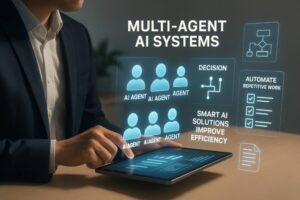
Smart AI entities are capable of handling entire repositories: they learn the requirements, develop architectural skeletons, build modular components, and execute testing processes with very little human intervention.
The other breakthrough is self-healing infrastructure. An intelligent monitoring system is an AI that monitors the system and automatically deploys corrective patches without human intervention.
In the future, AI-powered architectural plans will assess a project’s size, budget, and traffic forecasts, aiding the proposal of the best system designs even before coding begins.
Artificially intelligent project management systems will predict delivery times, intelligently distribute engineering resources, and identify bottlenecks before they derail the process.
The new frontier of innovation in software development is the transition from AI assistance to AI orchestration.
Enterprise‑Grade AI in Software Development Beyond Code Suggestions
Software complexity increases with the size of an organization, which is not yet an enterprise. Millions of lines of code can be reached. Microservices operate in dispersed clouds. Compliance regulations become stricter. Security threats sharpen.
At this scale, AI becomes a strategic layer of engineering and not a productivity tool. Enterprise AI aims to enable massive code management, architectural insight, anticipatory surveillance, and compliance automation.
Solving a Big Codebase with AI Intelligence
Big organizations are often struggling with legacy systems that have evolved. Multiple teams share repositories, documentation is not consistent, and technical debt accumulates silently.
Repository analysis tools are AI-driven and can scan entire code bases in several minutes. They identify idle modules, cycle dependencies, and obsolete libraries and advise refactoring them systematically.
Leaders receive summarized information on code health (dependency risk scores, architectural drift detection, maintainability indexes) instead of manually auditing thousands of files.
AI enhances long-term sustainable living approaches by replacing a reactive debugging system with active optimization and enabling the mitigation of catastrophic failures caused by vulnerabilities.
Artificial Intelligence in Microservices and Distributed Architectures
Microservices are commonplace with enterprise systems to scale and remain flexible. Distributed systems, however, introduce operational complexity.
APIs, message queues, and event streams are some of the services that talk to each other. Latency bursts or service failures may spread across the ecosystem.
Monitoring systems based on AI investigate patterns of inter-service communication. They identify abnormal latency, traffic, and latent dependencies. AI does not just report failures, but it also explains how things work.
To illustrate, when a payment service is slowed by database sluggishness, AI identifies the cause and advises scaling or caching.
This forecasting ability shifts the management of infrastructure, replacing reactive troubleshooting with smart choreography.
Enterprise Architecture Recommendations on an Intelligent Architecture
AI platforms at the enterprise level are increasingly useful for architectural decision-making.
In constructing new systems, AI models compare related projects across industries and propose the most appropriate database architecture, caching methods, load-balancing approaches, and cloud configurations.
These recommendations are based on performance, scalability, and cost-efficiency testing.
Instead of substituting for architects, AI is an analytical companion that can provide structural details based on evidence, identifying design weaknesses early and enhancing infrastructure resistance during implementation.
Enterprise AI will eventually replace the need for firms to write code; it will be relied upon to inform the architectural development of the entire digital ecosystem.
Applied Industry Effects of AI-Driven Software Creation
The concept of AI is interesting to learn about in theory, but its real strength is evident in industry transformation. In startups, mid-sized businesses, and other enterprises with global scale, AI-based development is transforming productivity, scalability, reliability, and competitiveness.
These advantages are not limited to coding speed. They feel business agility, operational resiliency, customer satisfaction, and speed of innovation.
Startup Acceleration Through AI Coding Tools
There are very thin lines in startups: limited budgets, limited team size, tight deadlines, and intense competition. Each decision about the development is important, since time-to-market might be a matter of survival.
Features such as authentication, payment gateways, database schemas, dashboards, and APIs were built by small teams manually. Both projects required weeks of manual work and dragged the project momentum.
AI Coding Tools Change that Equation
Workflow developer scaffolds backend code in minutes, which is not hours, with AI-assisted programming. Timely API routes are automatically generated from prompts, input validation is presented in the context, error handling is written with best practices, and documentation is written in line with the code.
This velocity reduces redundant labor, though it still requires skills. Developers switch to new features, user experience, and differentiation.
AI reduces the difference between small businesses and big ones. It takes three engineers to develop smart tools, and what would have taken ten before now takes only three.
This is a transformational shift in SaaS competitive markets.
Enterprise Stability Through AI in DevOps
Startups are fast, but enterprises are stationary and big.
Large SaaS systems use continuous deployment and release updates several times daily. Pipelines deal with thousands of commits, work on distributed teams, have little room to spare, and are gigantically complex.
AI in DevOps adds predictive intelligence to these pipelines.
AI is used to identify patterns relating to unstable releases by examining historic deployments, build metrics, and rollback incidents. In retrospect, when the new construction repeats the same patterns, it warns engineers before implementation. This protection measure reduces downtimes and secures SLAs.
Log analysis is also made efficient. There are millions of log entries created each day; it is not feasible to review them manually. The AI log engines identify anomalies, group related errors, and attribute them to code or infrastructure adjustments.
Therefore, companies repair issues that customers cannot perceive, enhance uptime, increase resilience, and safeguard their reputation in critical mission ecosystems.
Quality Assurance Revolution Through AI Testing Automation
The classical QA uses manual test cases, regression scripts, and human inspections- time-consuming and subject to blind spots.
The Automation of AI Testing Makes QA a Proactive Field
By analyzing user behavior, AI designs realistic interaction patterns and dynamic test scenarios. For example, an e-commerce site can experience spikes in traffic during sales, revealing bottlenecks in production ahead of time.
AI-based tests are better than regular tests because they increase coverage by identifying under-tested paths and recommending new ones. It is also focused on regression tests based on historical defect data to estimate failure probability.
The resultant effect is a better architecture. Bugs are discovered earlier, edge cases are addressed, and confidence in the release increases.
The introduction of AI testing does not eliminate the work of QA engineers; they can still spend their time on exploratory testing, usability testing, and the highest-impact improvements.
How to use AI in Your Software Development Process.
There should be strategic planning for AI adoption rather than hasty deployment. The process of successful efforts starts with identifying friction in the existing lifecycle.
Boilerplate code, delays during debugging, or CI/CD instability may indicate a problem within the team. Measure measurably inefficient things.
Implement AI Tools in Areas Where they are Likely to Deliver Clear Returns
For example, one can begin with AI coding assistants on non-critical modules, where developers can get used to them. Set up processes of organized review gradually. AI recommendations should be treated as drafts, not final products. Quality, performance, and security are guaranteed by human validation.
Roll out AI in DevOps gradually anomaly detection, predictive failure analysis, and automated rollbacks.
Security integrity should not be compromised. All AI-generated components are expected to meet vulnerability tests, dependency analysis, and compliance tests. Governance systems do not allow innovation to compromise cybersecurity.
The training is also necessary. The developers should know how AI suggests changes, what data restrictions to apply, and how to identify hallucinations. Knowledge ensures it is used responsibly and not over-reliant.
With proper application in place, AI will be a well-organized productivity multiplier, rather than an experiment of itself.
Psychological Change in Software Engineering
AI has transformed software development, not only in how engineers write code but also in how they think.
Over the years, developers were required to memorize syntax, configuration instructions, framework specifics, and design patterns. That psychological burden suffocated their creative ability, as recollection consumed the majority of their thinking capacity.
AI Coding Tools Lift that Load
Engineers, by overcoming repetitive syntax, now have time to think, design, and engage in architecture. Innovation is encouraged, since the mind is not used to remembering information but to creating it.
Expertise has been defined differently. The modern-day developer is not evaluated by how many methods they can memorize in a library, but by their ability to build scalable applications, make trade-offs, and apply intelligent tools.
Balance is still vital. Using AI without understanding its logic may result in a loss of fundamental problem-solving skills. The most effective teams are those that combine AI acceleration with profound conceptual knowledge.
This is a mental change that is not overt but strong. The developers begin their tasks as physical constructors and, under the guidance of smart assistants, transform into conceptual designers.
Ethics and Strategy of AI-Driven Programming
With the mainstream adoption of AI-enabled software development, ethical and strategic issues must be addressed.
Among the major ones is the issue of intellectual property. Organizations must define the rights to own, own, and license code produced by AI systems that learn from large volumes of data. Clear internal policies ensure innovation, integrity, and legal compliance.
Another important dimension is data privacy. AI code assistants embedded in the development environment can process proprietary data. Businesses should embrace secure deployment models, encrypted data manipulation, and tight access controls.
There is a threat of bias in AI-generated logic. When training data harbours biases, the result can be biased by unwarranted assumptions. Regular audits by responsible organizations are done to foster fairness and inclusiveness of algorithmic systems.
Strategic planning is a preventive measure against the short-term productivity benefits becoming a long-term liability. Organizational stability is supported by a transparent system of governance, code review standards, and monitoring of adherence.
The use of AI in software engineering is not about ethics, but about the core of sustainable innovation.
The Future of AI-Driven Software Engineering
Artificial intelligence in software development has a long way to go beyond existing coding tools
AI agents that can control the full development process appear autonomous. Instead of creating individual functions, these systems analyze high-level requirements, develop implementation plans in a structured way, build modular components, and automatically generate testing infrastructure.
The other frontier is self-healing applications. The intelligent systems monitor behavior at runtime, and when minor failures occur, the AI agents automatically apply corrective patches, minimizing downtime and increasing reliability.
The use of AI-assisted architecture design will become the norm. Considering estimated traffic growth, business priorities, and cost considerations, AI models will suggest the best cloud configurations, database designs, and scaling options in advance of development commencing.
The AI-native development environments of the future will bring together all of the elements of coding, debugging, documentation, deployment, monitoring, and analytics into a single state of cleverness. Developers will communicate with a native infrastructure that learns and predicts needs, proposes optimizations, and dynamically implements infrastructure.
The developer will transform from a lonely coder to a tactical organizer of smart systems.
Final Reflection
The most popular AI software development tools are the most significant change in the history of programming.
AI coding tools accelerate creation. AI testing automation enhances reliability. DevOps becomes more stable with the help of AI. AI secures digital infrastructure.
It is not a process of eliminating human beings in the engineering field, but rather one of enhancing human ability through intelligent teamwork.
Those who adopt AI responsibly, introduce the concept of governance, and foster a culture of knowledge among developers will guide the next generation of digital breakthroughs.
Software development is shifting from manual construction to smart orchestration, and this change is just beginning.