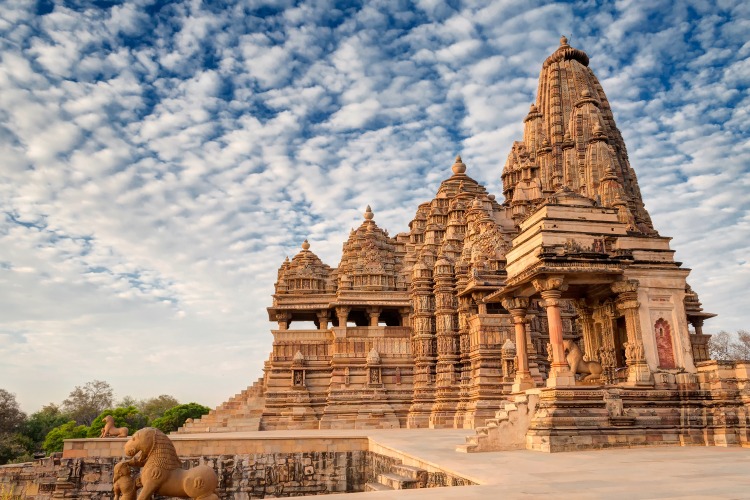
Temples are more than just stone and marble. They are living places of worship filled with stories, memories, and centuries of devotion. For many, a temple offers a slower pace, quiet prayers, hopes, and a sense of peace.
Locals mainly visit some temples, while others stand out for their size and importance, drawing millions of visitors each year. Pilgrims may travel for hours or even months to spend a few moments inside the most famous temples in the world.
This leads to a natural question: which is the most famous temple in the world?
The response to this is based on two variables: the number of visitors and the intensity of the love and respect to be shown to the temple. Some temples draw huge crowds; there are temples of historical and aesthetic value. Some of them mix it up and become world icons.
In this blog, we have ranked the world’s famous temples by their number of visitors and popularity. We also explore their history and memorable moments along this journey, bit by bit.
What Makes a Temple Famous in the World?
We ought to know what fame consists of in this regard before we mention it.
Millions of followers come annually.
- It is of profound religious or cultural significance.
- It is of ancient origin, or it is very historical.
- It has a unique or breathtaking architecture.
- It has a name known to people all over the world.
With these points in mind, let’s look at some truly exceptional temples.
1. Tirumala Tirupati Balaji Temple (India) -The Wealthiest and the Busiest Hindu Temple
It is a temple of Lord Venkateswara, located on the Tirumala hills in Andhra Pradesh. From early morning to evening, worshippers queue and queue. It has 30 -40 million visitors each year and is also one of the busiest temples in the world. Ordinary days have tens of thousands; particular fetes may be well-nigh one lakh in one day.
Faithists believe that God grants wishes; thus, sacrifices take the form of gold and money to hair. Such high donations make Tirupati the wealthiest temple in the world. The patients stand the test of time, even with the waits and the worry about what is coming before the deity brings the light that will make the face emotional; it will be worthwhile.
Faith maintains this temple daily.
2. Masjid al -Haram (Mecca, Saudi Arabia) -The most visited religious site.
Mecca is the world’s most visited and popular religious site. Located in Saudi Arabia, it surrounds the Kaaba, the center of the Islamic faith. Muslims everywhere face the Kaaba when they pray. Each year, over 20 to 25 million people visit Mecca, with millions gathering during the Hajj.
Pilgrims circle the Kaaba seven times in a ritual called Tawaf, creating a sea of white.
People from many countries come together as equals. While it is technically a mosque, many consider it the largest temple-like pilgrimage site in the world because of its spiritual importance and the number of visitors.
Nothing else matches its size and devotion.
3. Angkor Wat (Cambodia), the largest Temple complex in History
A good example of a temple that has gained fame for its great design is Angkor Wat. It stands in Cambodia and is its largest religious monument, occupying an area larger than that of several cities. It was constructed in the 12th century as a Hindu temple, which was later converted to a Buddhist temple.
It is used today as a place of worship and as a historical marvel. Each year, the site attracts approximately 2-3 million visitors, including tourists, historians, photographers, and monks.
There are huge towers erected into the sky, and the walls are adorned with detailed carvings. There are long corridors that seem to be never-ending, and every stone has a story to share about the ancient times.
The view of the sunrise is particularly amazing: the sun rising behind the towers and reflected in the water makes the scene unreal. The non-religious visitors are also drawn to the past and have a special attachment to it, as they feel quiet yet strong differences.
4. Golden Temple (Amritsar, India) A Mark of Spiritual Peace, Equality, & Brotherhood
One of the places that you can go to and feel the most peaceful is the Golden Temple or Harmandir Sahib. It is the most sacred temple of Sikhism, and it attracts 6-10million people in a year.
The only difference is that it is beautiful and unique in terms of values as well. The temple is placed in the middle of a sacred water tank; its walls are made of gold, and it shines at night, with the temple’s reflection glinting on the water.
The Langar or community kitchen is the very heart of the temple. Over 100,000 individuals are served free meals every day. With or without money, they sit down together, no matter what, and this message of human equality is reiterated.
Soft prayers are being prayed inside. Volunteers work silently. The visitors help leisurely through the marble walk.
There is a peaceful atmosphere even in the large crowds. That is the enchantedness of the Golden Temple.
5. Kashi Vishwanath Temple (Varanasi, India) – the Spiritual Heart of Hinduism
Varanasi is also commonly referred to as the spiritual capital of India. The main one is the holy Kashi Vishwanath Temple, dedicated to Shiva.
The temple is among the twelve Jyotirlingas and, as such, has become extremely significant to Hindus. Every year, millions of people go there to get blessings and spiritual liberation.
This experience is unlike that of other temples. Narrow and busy streets surround it. Bells toll constantly. Priests chant mantras. Incense fills the air. It has the Ganges River, which flows softly.
This city exists between life and death. People also visit here to pray, celebrate, and even spend their last days.
As a result of this spiritual attachment, Kashi is more of an emotion than a place.
Not only is it not a temple, but it is an inner journey.
6. Shwedagon Pagoda (Myanmar) – The Golden Stupa That Lights the Sky
Shwedagon Pagoda is a landmark in Yangon, Myanmar. This huge stupa, covered with gold plates and precious stones, glimmers in the sun.
It is even more beautiful in the dark with lights around. It is a legend that the pagoda is over 2,500 years old.
It is said to contain holy relics of the Buddha and is therefore of great significance to Buddhists. Daily, thousands of followers come. People walk around the platform a lot, often without shoes, and present flowers and candles.
The marble floors remain cool to the foot.
A gentle wind blows. Monks are sitting in meditation. However, despite its majestic look, the impression is soft and serene.
It is the best place in the temple where time seems to move slowly.
7. Wat Phra Kaew (Thailand) – Emerald Buddhism-Home
Wat Phra Kaew is the most holy Thai temple, located within the Grand Palace compound in Bangkok. It also contains a small but much-adored statue of the Emerald Buddha, made of jade.
It is a smaller temple compared to others on this list, but it receives millions of visitors every year due to its royal and religious significance. The architecture is elaborate and bright. Golden roofs shine in the sun. Paintings and carvings all over the walls. Every corner resembles an artwork.
Tourists come for the beauty. Devotees come for blessings.
Both are left impressed.
The temple is a perfect blend of spirituality and royal history.
8. Vaishno Devi Temple (India) -The Mountain Pilgrimage of Faith
Vaishno Devi Temple is considered among the most popular temples in India. It is located on the Trikuta mountains of Jammu and Kashmir.
It is not easy to approach the temple. Practitioners cover an uphill distance of about 1213 kilometres. Others are riding on horses or helicopters. Quite a number of them walk barefoot as a sign of devotion.
Nevertheless, the long distance has not deterred more than 8-10 million people per year from taking an interest. The temple is dedicated to Mata Vaishno Devi, one of the forms of Goddess Durga. People think that she protects and grants wishes.
The journey is what makes this place special. As they walk, they recite prayers in their families. Strangers help each other. The journey is more like a joint spiritual journey.
You are fatigued and very satisfied by the time you get to the cave shrine.
Pilgrimage teaches patience, faith, and strength.
9. Somnath Temple (India) The Temple That Rose and Rose Again
The Somnath Temple proudly stands on the Western coast of Gujarat, overlooking the Arabian Sea.
It is among the twelve Jyotlingas of Lord Shiva and is therefore of great sanctity in Hinduism.
Invaders destroyed the temple many times over the centuries whenever it was restored rounder, bigger, prettier.
Somnath has become a symbol of strong will and beliefs.
It is a spiritual center and a large building that is visited by millions every year. The harmony of waves on the shore near the house makes the sound calm.
At that place, you can feel that faith withstands everything.
10. Kedarnath Temple (India) – The Himalayan Shrine
Kedarnath Temple is not only well-known; it is memorable.
This temple is in the Himalayas (over 11,000 feet) in the midst of snow-covered mountains and cold winds.
It is devoted to Lord Shiva and is part of the Char Dham Yatra, one of the most significant pilgrimages in India.
This is not easy to reach Kedarnath. Tourists walk great distances through rugged mountain trails. The weather can change quickly. Still, lakhs of worshippers come there every year.
The temple appears tiny in comparison with the tremendous mountains in the backdrop, yet it is very mighty.
Early in the morning, the valley is covered in mist. Bells ring softly. The air is pure and fresh.
It is not merely a visit but a spiritual journey.
11. Pashupatinath Temple (Nepal) – Temple of Sacred Shiva by the River
Pashupatinath Temple is among the most significant places devoted to Lord Shiva, located in Kathmandu, Nepal.
It lies along the bank of the Bagmati River and receives millions of Nepalese and Indian pilgrims annually.
It is a large complex with small shrines, ashrams, and prayer areas. Devotees, sadhus, and monks assemble here daily.
Among these peculiarities is the fact that traditional cremations are held on the riverbanks. This helps visitors to remember how short-lived life is.
As a result, the temple is very spiritual and introspective.
It isn’t flashy or grand. But it silently comes to the heart.
It is believed that a visit to Pashupatinath can change many people’s views on life.
12. Borobudur Temple (Indonesia) – The Biggest Buddhist Temple in the World
Another architectural marvel is Borobudur in Indonesia.
The largest Buddhist temple in the world was built in the 9th century.
The building is a massive stone pyramid with terraces. All the levels are phases of spiritual development. Carvings on your way up the mountain tell about the life of Buddha.
Over 34 million visitors/pilgrims every year.
The temple is magical during the sunrise. The stupas are lit up by soft light. The hills around are shrouded in fog.
Numerous visitors take a slow walk on each level, as if in meditation.
It feels calm and thoughtful.
Borobudur demonstrates that architecture may lead to a spiritual experience.
13. Sri Ranganathaswamy Temple (India) -The biggest Operational Temple Complex
It is one of the largest active temple complexes in the world, situated in Srirangam, Tamil Nadu. It is devoted to Lord Ranganatha, a reclining Vishnu.
The complex spans 156 acres and comprises numerous gates, towers, and halls. The highest tower sticks very much above the city skyline. Thousands of devotees crowded the streets during festivals, making colorful, lively, and joyful celebrations.
The temple is very traditional despite its enormous size.
Rituals in daily life continue as they have for centuries, with monumental and pious elements.
14. Mahabodhi Temple (India) -The seat of enlightenment of Buddha
One of the world’s Buddhist pilgrimage sites is the Mahabodhi Temple in Bodh Gaya.
It is the very spot where Gautama Buddha attained enlightenment under the Bodhi tree; thus, it is one of the holiest Buddhist places on Earth.
Monks from most countries meditate here, and various languages are heard reciting the same prayers. The temple’s simple yet elegant design creates a peaceful atmosphere.
Tourists take their seats under the tree, read, pray, or breathe, and learn to be still.
Here, calmness turns out to be the best gift.
15. Akshardham Temple (India) -A Contemporary Architectural Wonder
Not every famous temple is ancient; there are also modern temples, though just as magnificent. This is the case of Akshardham Temple in Delhi.
It is a relatively new building, featuring traditional Indian architecture yet with the precision of modern architecture. It has a fine finish in its carvings, pillars, and domes.
Millions of people visit it annually, not only to pray there but to view the design. Exhibitions, gardens, and cultural shows are also held in the complex, which depict the history and values of Indians.
The temple shows that spirituality can blend perfectly with contemporary creative imagination.
16. Jagannath Temple (Puri, India) -The Temple of the Grand Chariot Festival
One of the most popular pilgrimage centers in India is the Jagannath Temple in Puri, Odisha, devoted to Lord Jagannath, a form of Krishna.
The temple appears solid and old-fashioned, with tall stone walls and a tall spire. However, it is not the construction that makes it what it is. The Rath Yatra, or chariot festival, attracts millions of people annually.
The deities are transported on giant wooden chariots and pulled by devotees using ropes. It transforms the mood into loud, joyful, and emotional, and thus the event becomes a celebration of faith rather than a ritual. Many families dream of visiting Puri at least once in their lives.
Jagannath Temple demonstrates how devotion may turn into a great communal event.
17. Konark Sun Temple (India) -The Chariot of the Sun Temple
Konark Sun Temple is not just a place of worship; it is an architectural wonder of ancient engineering.
The temple was constructed in the 13th century and is in the shape of a giant stone chariot of the Sun God, with 24 giant wheels and seven horses. Even in the present times, the carvings appear realistic and lively.
Each wall features a story depicted in sculptures, and its accuracy still amazes historians. Konark is considered one of the most frequented heritage temples in India, though it is currently partially in ruins.
The temple’s visitors are tourists, photographers, and history lovers who visit year-round, feeling its great size and the amazing craftsmanship.
It reminds us that in the past, temples were constructed not only for prayer but also to display art and science.
18. Temple of Heaven (Beijing, China) -Where the Emperor prayed for good Harvests
In Beijing, the Temple of Heaven is unlike traditional temples. It is a sanctuary of architecture, like a serene park.
The complex was constructed during the Ming dynasty, and Chinese emperors used it to pray for a bountiful harvest and the prosperity of the country. With its simple, elegant design, it has become a classic against the sky, featuring a round, blue-roofed hall that is beautiful in all seasons.
Millions of visitors come every year nowadays. Some praise its history; some go on silent walks. Residents are either practicing tai chi in the gardens or meditating.
In contrast to pilgrimage places, which are crowded and congested, the temple is serene and open, demonstrating that spirituality may be quiet and gentle as well.
19. Tanah Lot Temple (Bali, Indonesia) Tanah Lot Temple The Temple by the Sea
The Tanah Lot Temple has been ranked among the most photographed places in the world.
The small sea temple is actually on a rocky island off the coast of Bali, and it seems to float on the ocean at high tide. The water does not defeat the temple when it is bashing about the rocks. The sky turns orange at sunset, and the temple becomes a dark shadow, making the sight a miracle.
The Tanah Lot is not large compared to other temples; nevertheless, its location and beauty attract millions of tourists each year. Indigenous Balinese regard this as holy, and they offer prayers here every day.
Tourists are attracted to both nature and religion.
It is one of the ways to prove that even nature itself can make a temple famous.
20. Senso-ji Temple (Tokyo, Japan) – The Oldest and Most Loved Temple in Tokyo
Senso-ji is the oldest Buddhist temple in Tokyo, located right in the middle of the city, and was built in 603.
Despite modern buildings and streetlights, the temple offers a traditional and relaxing experience. Tourists enter the city through the magnificent Kaminarimon Gate, stroll along the busy shopping streets, and arrive at the main hall, where incense smoke and prayers fill the air.
It is one of Japan’s most visited temples, attracting approximately 30 million visitors annually. Individuals are also making fortune slips, lighting candles, and placing coins on the shrine as a form of blessing, which creates a friendly, rather than strict, atmosphere.
Tourists who do not even know about Buddhism find it pleasant to spend time here. Senso-ji is a good combination of ancient culture and a modern city.
10 Tips for Visiting World-Famous Temples
In case you intend to go to any of these well-known temples in the world, it is important to keep in mind that they are not only tourist attractions. They are holy spots rich in religion, feeling, and decades of history. An element of respect and consciousness will help to make your visit more significant and memorable.
Wear simple and well-mannered clothes
Wear plain, loose-fitting clothes that cover your shoulders and knees. Wearing conservatively is a tribute to the culture and allows you to blend in with devotees.
Take off your shoes before you get inside.
The vast majority of temples require you to take off your shoes. Barefoot is the sign of humility, cleanliness, and piety.
Adhere to the customs and regulations within the locality.
There are traditions of each temple. Others do not allow photography; others require separate lines or special entry conditions. Pay attention to the indicators and do what the people there do.
Keep your voice low
The spaces used for prayer and meditation are called temples. Speak in a whisper and keep the conversation low so everyone can pray in peace.
Due respect for ceremonies and rituals
In case there is a prayer or ceremony taking place, watch silently. Do not break and hinder devotees. Observe the culture with respect, and you will be better positioned to appreciate it.
Visit early in the day
Mornings are not that busy and are not hot. You do not have to wait in long lines to experience the temple’s authentic atmosphere.
Be patient in queues
Popular temples usually have long queues. Stay calm and patient. They are there for the same reason as faith and devotion.
Do not make it look like a picturesque point
Only take pictures where it is allowed, but do not allow your camera to distract you. To begin with, have a look with your eyes.
Keep the surroundings clean
Littering and destroying anything. These sites are hundreds or thousands of years old and should be preserved.
Go with an open heart and mind
Most importantly, slow down. Listen to the bells, the chanting, the smell of incense, and the relaxing atmosphere. It is these little things that can turn out to be the best.
Final Thoughts
Having seen all these amazing temples, there is one question left unanswered: which is the most famous temple in the world?
When focusing solely on visitor numbers, it is clear that Mecca leads with millions of pilgrims annually. The everyday crowds and tributes distinguish Tirupati. Angkor Wat can never be compared in terms of scale and architectural genius. Also, should we consider service, equality, and humanity, the Golden Temple glowed in its beautiful light.
Meanwhile, there are additional temples such as Borobudur, Kedarnath, Pashupatinath, Senso-ji, Tanah Lot, Somnath, Jagannath, and many others, which contribute to this list of charms and meaning. Each of them has its own story, its own atmosphere, and its own emotional bond with the people who visit them.
This is why it is not easy to select just one temple as the most famous.
Fame does not simply involve mere numbers or popularity. It concerns the impressions a location produces. A temple is special when one enters exhausted or anxious and comes out feeling better and more optimistic. You remember it, even a moment of silence within it, as indelible over the years.
And finally, we have the best-known temple; it may be the one that speaks to your heart. The one where you feel calm. The one you are thankful for. The one that you feel you are part of something bigger than you are.
And there are occasions when such personal attachment is more important than any ranking can ever be.